
Huntersville People Directory Choices
Huntersville people directories do not form one master list. Public roles appear in town rosters and school pages. State staff have a separate name and agency search. Land records identify assessed owners or parties to filed deeds, while historical collections can place a past resident at an address, school, church, club, or civic group. Choose the directory that matches the role or period attached to the person.
| Directory | People Shown | Keeper | How to Access |
|---|---|---|---|
| Town officials and boards | Elected and appointed members | Town of Huntersville | Official rosters and meeting minutes |
| NC Employee Directory | Current state employees | State of North Carolina | Free name and agency search |
| CMS school pages | Faculty and staff by school | Charlotte-Mecklenburg Schools | Free, paginated school directories |
| POLARIS | Assessed property owners | Mecklenburg County | Free owner, address, or parcel search |
| Professional and business lookups | Licensees, entities, agents, and filed officials | State boards and Secretary of State | Free public summaries |
| City directories and yearbooks | Past residents, students, faculty, and groups | Library and DigitalNC | Digital, library, or microfilm access |
A current teacher is best checked on the relevant CMS school page. A state worker belongs in the state employee search, not a town roster. For an owner, use POLARIS and treat its name as assessed ownership rather than proof that someone lives at the site. Past residents often require a city directory, yearbook, newspaper, or archival record because no current portal reaches every era.
Huntersville Government Directory Routes
Town board pages and meeting minutes are small civic directories. They identify commissioners, advisory-board members, appointment dates, and people who took part in public business. Minutes preserve former members after a current roster changes. Huntersville Town Hall keeps town-level material, but town government does not maintain the county deed, parcel, voter, court, or modern birth and death systems.
For state personnel, use the official North Carolina Employee Directory. It searches first or middle name, last name, and agency. A result may show the employee name, agency, telephone, email, and Mail Service Center or work address when published. It does not list Huntersville town or Mecklenburg County workers.
| Search Control | Type | Required | Use |
|---|---|---|---|
| First/Middle Name | Text | No | Search a personal name |
| Last Name | Text | No | Use as the main name key |
| Agency | Dropdown | No | Narrow results to a state agency |
| Reset | Button | Not applicable | Clear all fields |
The captured state employee search shows the official interface.
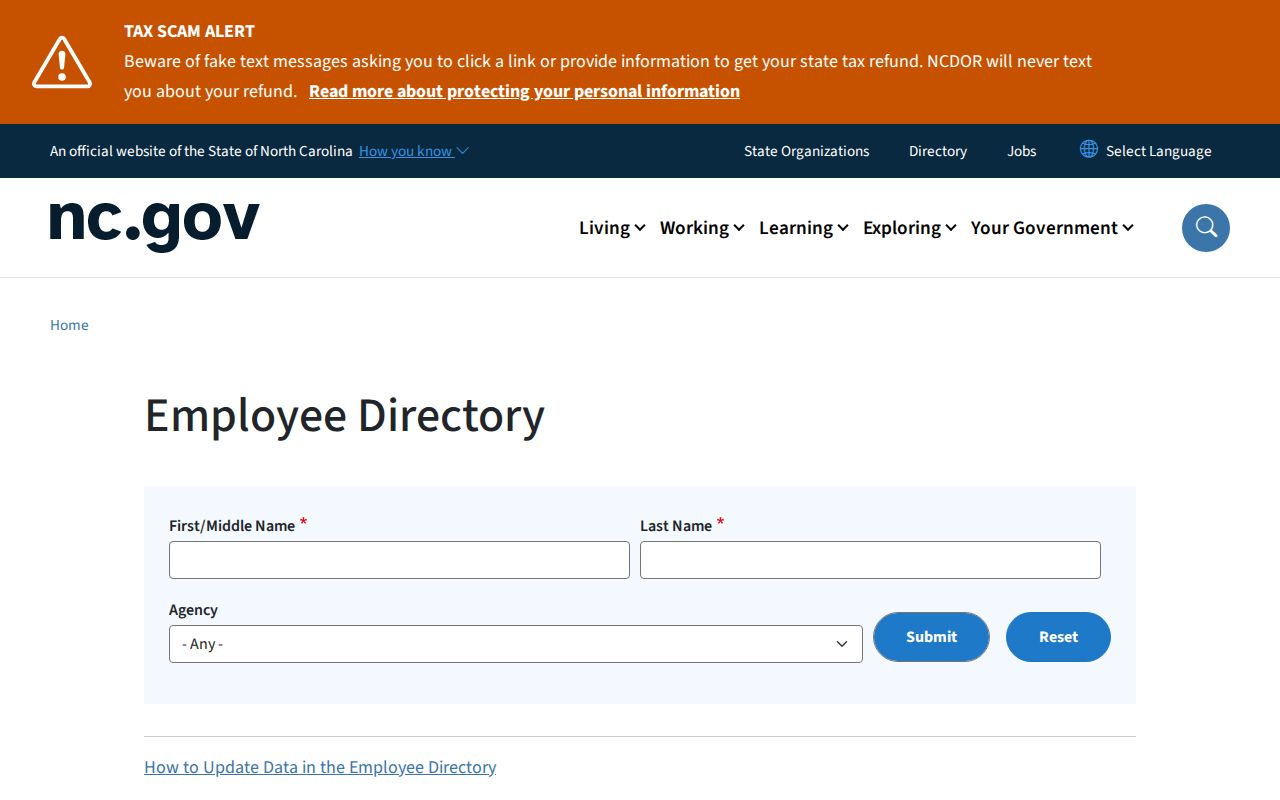
Its agency filter helps separate two people with the same name and ties a result to a public role.
When a town or county staff member has no published entry, call the relevant department or clerk. For an existing nonexempt government record, a focused request should name the record series, department, subject, and date range. The access-law process belongs with Huntersville public records, not with a directory entry.
Huntersville School Staff Directories
Charlotte-Mecklenburg Schools publishes staff pages one school at a time. That matters because “Huntersville school” can mean Huntersville Elementary, Barnette, Blythe, Torrence Creek, Long Creek, J.M. Alexander, North Mecklenburg, Hopewell, Merancas, or another campus tied to a given year and boundary. A current school finder cannot settle where a former student attended.
The inspected Huntersville Elementary faculty and staff directory accepts a keyword, first name, or last name. It showed 20 entries per page and 102 total at inspection. North Mecklenburg High showed 170 entries, while Hopewell showed 157. Counts can change as school rosters change.
- Full name: shown for each listed staff member.
- Role: one or more role titles or code descriptions may appear.
- School context: the page supplies the campus name and main contact details.
- Direct contact: an individual phone number or email is not guaranteed.
- Pagination: entries continue across several result pages.
UNC Charlotte is another strong regional source for faculty, staff, alumni, organizations, and university history. The research confirmed its Special Collections role, but not the exact current directory fields. Use the university’s official search rather than assuming the CMS form or result layout applies.
Huntersville Property Owner Directories
Mecklenburg County POLARIS works as an owner directory for the current assessment roll. Search by owner, street address, or parcel ID, or select a parcel on the map. A report can show assessed owner, owner mailing address, site location, parcel identifier, legal description, land use, zoning, municipality, districts, and value data.
A Huntersville postal line also may fall inside town limits, the town’s extraterritorial planning area, or another part of northern Mecklenburg County. Check the address in GeoPortal before picking a custodian. GeoPortal connects an address with its parcel, school, voting, service, environmental, and district geography.
For past ownership, the Mecklenburg Register of Deeds index lists grantors and grantees. A grantor transfers or encumbers an interest; a grantee receives one. Search the current deed reference, then follow each prior grantor as a grantee. Save book and page, document number, parcel ID, and legal description. The earliest year in the web index was not confirmed, so older work may require the office or the State Archives.
Note: An indexed deed party or assessed owner is not the same as a complete directory of everyone who occupied the property.
Huntersville Professional Directory Searches
North Carolina licenses many professions through separate boards. The state licensing-board directory routes searches for lawyers, medical professionals, nurses, contractors, real estate brokers, cosmetology licensees, and other regulated fields. Results vary by board, but may include a name, credential number, status, public contact address, issue or expiration information, and public discipline links.
The Secretary of State Business Registration Search lists entities and filing details. Search the legal entity name and inspect status, formation or registration date, registered agent, office addresses, company officials when filed, and filing history. Assumed business names can lead back to the Register of Deeds. Planning cases, permits, health inspections, and alcohol records can add local context around Huntersville’s real estate, construction, health, retail, and Lake Norman economy.
These professional people directories are best used to verify a claimed public credential or connect a filed business name with an official entity record. No one roster forms a complete Huntersville business-owner list.
Huntersville NC Cash Directory
The State Treasurer’s NC Cash search is a name-based source for unclaimed property. It can surface a North Carolina connection when funds or property have been turned over to the state, followed by an official claim process. It is not a resident roll, and a common name should be checked against the location and other details shown by the official system.
The captured unclaimed-property name search shows the official starting point.
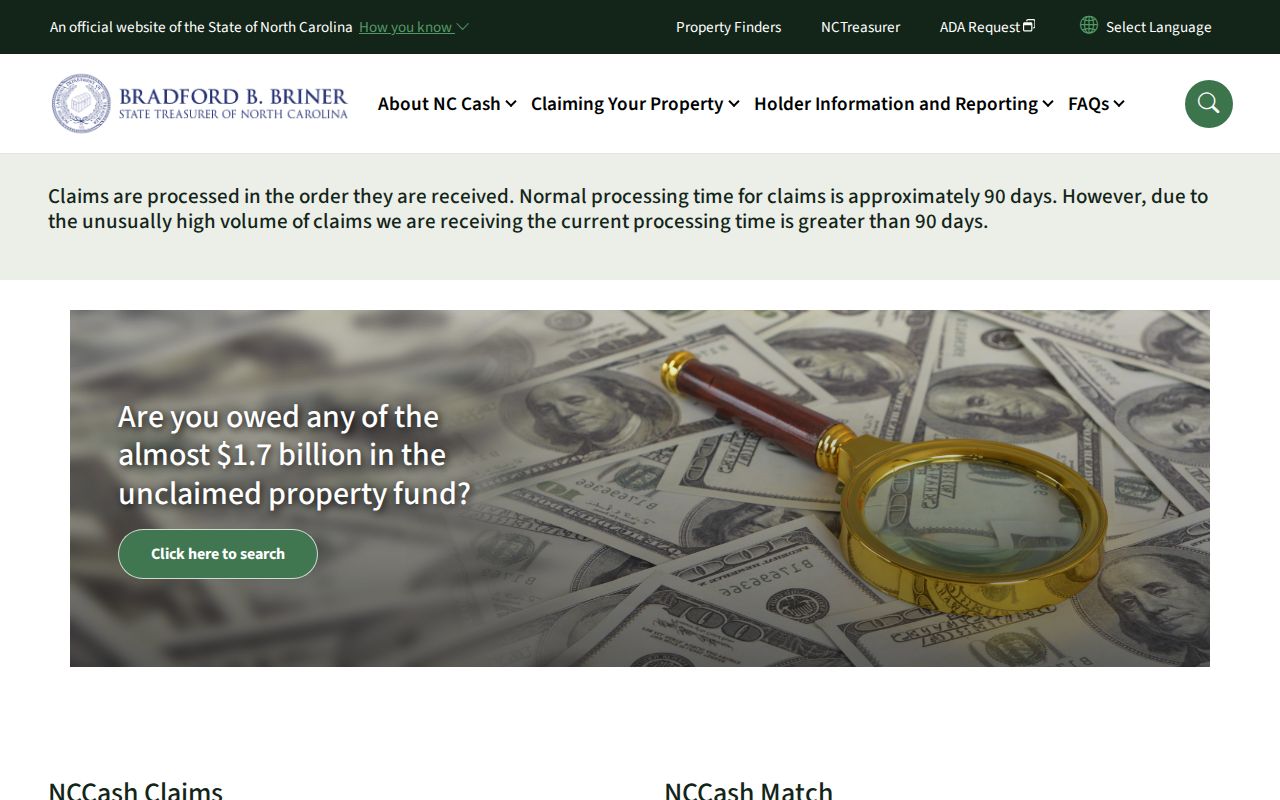
A possible match is only a lead. Follow the Treasurer’s proof and claim steps rather than treating the listing as current contact information.
Historical Huntersville People Directories
The Robinson-Spangler Carolina Room and Library Archives hold city directories, local government documents, newspapers in print and microfilm, public and private school yearbooks, maps, photos, manuscripts, family-history files, and broad North Carolina material. The library describes the collection as the state’s largest public-library genealogy collection.
The captured Charlotte Mecklenburg Library archives page shows the official collection.
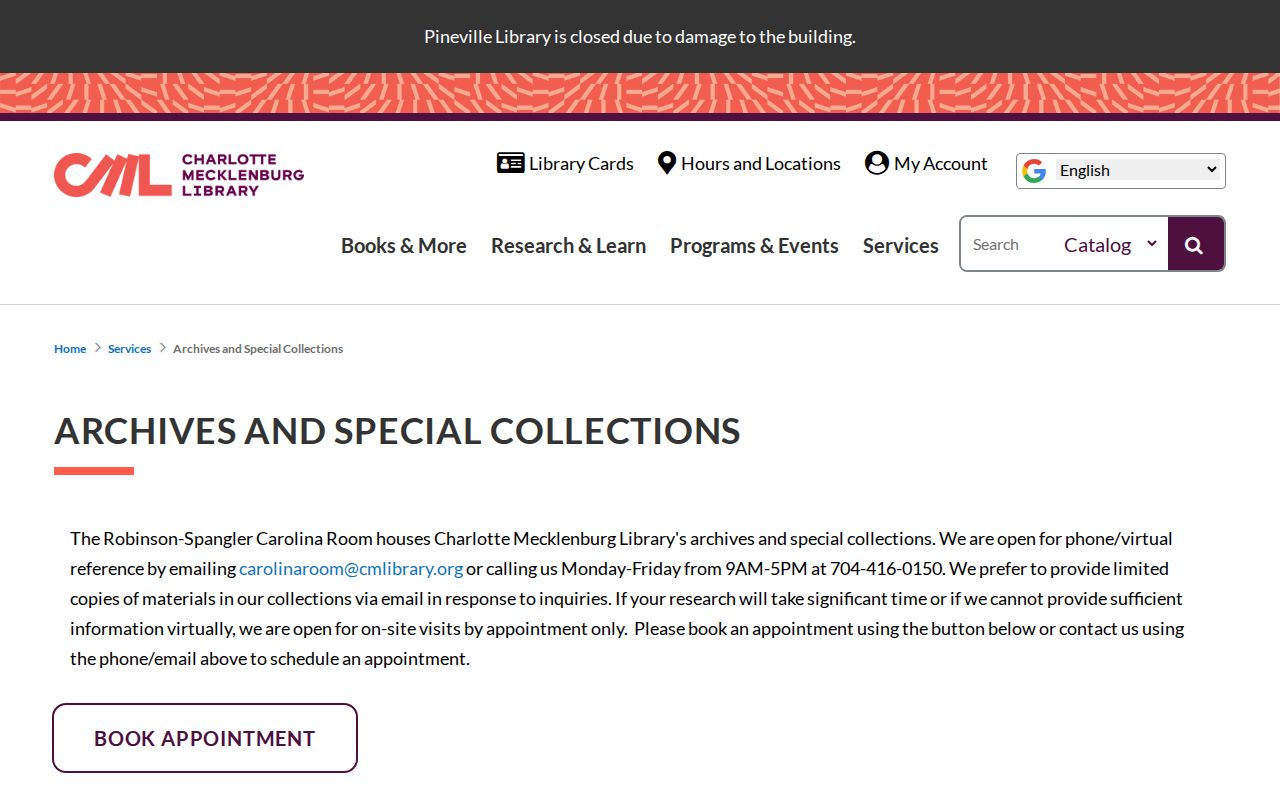
Verify current appointment and physical-access details because the Carolina Room’s move into the new Main Library changes where in-person research takes place.
| Collection | Confirmed Scope | What It Can Establish |
|---|---|---|
| Hill city directories | Digital examples for 1933, 1935, 1939, and 1945/46 | Adult name, spouse, work, home address, and later reverse street entries |
| School yearbooks | Public and private Mecklenburg schools, year-specific | Students, faculty, clubs, teams, and school identity |
| Newspapers | Print, microfilm, and licensed or digitized collections | Obituaries, relatives, prior homes, and organizations |
| Archives records | Wills 1749–1967; miscellaneous records 1759–1959 | Kin, estates, public duties, bonds, and filed matters |
The library confirms city directories but does not publish a full continuous shelf list or separate Charlotte from suburban Huntersville in every edition. Ask staff about the needed year. DigitalNC confirms individual volumes, not an unbroken run.
Inside Hill’s Reverse Directory
A city directory is more than an old phone book. The alphabetical section can give an adult resident, spouse, occupation or employer, and home address. A reverse or householders section runs from street address to occupant, which helps identify neighbors and distinguish two people with the same surname.
The 1945/46 Hill volume is especially rich. Its contents include apartment buildings, clergy, clubs, associations, cemeteries, schools, labor and fraternal groups, railroads, government rosters, a street-and-avenue guide, a householders guide, and a numerical telephone directory. Those lists can rebuild a person’s community ties, not just an address. See the official DigitalNC directory catalog record and check suburban coverage edition by edition.
- Alphabetical directory
- Names arranged by surname, often with spouse, occupation, and address.
- Householders guide
- Residents arranged by street and house number for reverse address research.
- Numerical telephone directory
- Listings arranged by phone number, useful when the number is the known fact.
- City directory year
- A snapshot for that edition, not proof that the same person stayed through the next year.
Huntersville Directory History Trail
Older people directories reflect changes in county and court recordkeeping. Mecklenburg County was created in 1762 from Anson County, so earlier residents can appear in parent-county or colonial series. Before 1868, the Court of Pleas and Quarter Sessions mixed court, probate, and administrative work, naming estate parties, officials, jurors, apprentices, licensees, and road workers.
- 1749: The confirmed Mecklenburg wills span begins. Wills before 1760 were filed with the Secretary of State.
- 1762: Mecklenburg County is created, and archived deed microfilm volumes 1 through 19 cover 1762 through 1826.
- 1866–1868: Cohabitation bonds and changing marriage records create a distinct family-history trail before modern licenses.
- 1930s–1940s: Confirmed Hill editions add dense name, address, group, and reverse street evidence.
The State Archives county-records guide covers bonds, census, courts, land, estates, marriages, taxes, wills, and miscellaneous holdings. Its copy form accepts narrow record types and date ranges, with fees quoted after review. Church registers and cemetery records can fill gaps before modern civil registration, though recent membership or sacramental lists may remain private.
Use Huntersville Directories Carefully
Official directories describe a role or recorded event. A CMS entry shows a school affiliation. POLARIS shows assessed ownership. A deed index names parties to an instrument. A voter lookup has a limited civic purpose and omits protected data. None is a universal list of Huntersville residents, and participation history never reveals how anyone voted.
Try surname variants, married or earlier names, initials, and alternate business names. Older sources often shorten given names. Pair a directory result with a second record that fits the same period and place, such as a deed, yearbook, obituary, census schedule, or court estate file. Direct contact and a respectful family-history inquiry can resolve ambiguity without exposing private group membership.
Use people directories for lawful research, reconnecting, genealogy, estate work, civic transparency, or checking an official role. Do not use an entry to stalk, harass, threaten, or harm anyone. Private congregation, neighborhood, alumni, and member lists require permission even when an older published roster is open at the library.
Note: Save a stable record number, edition year, parcel ID, or page reference before requesting a copy or asking staff for help.